Product design, prototypes & precision
From an idea.
To something real.
Thoughtful reading on product design, CAD handoffs, prototyping, materials and the conversations that connect design with fabrication.
Start here · Design foundations
A clear brief.
A stronger beginning.
A clear brief connects the purpose of a product to the decisions ahead.
Read the guide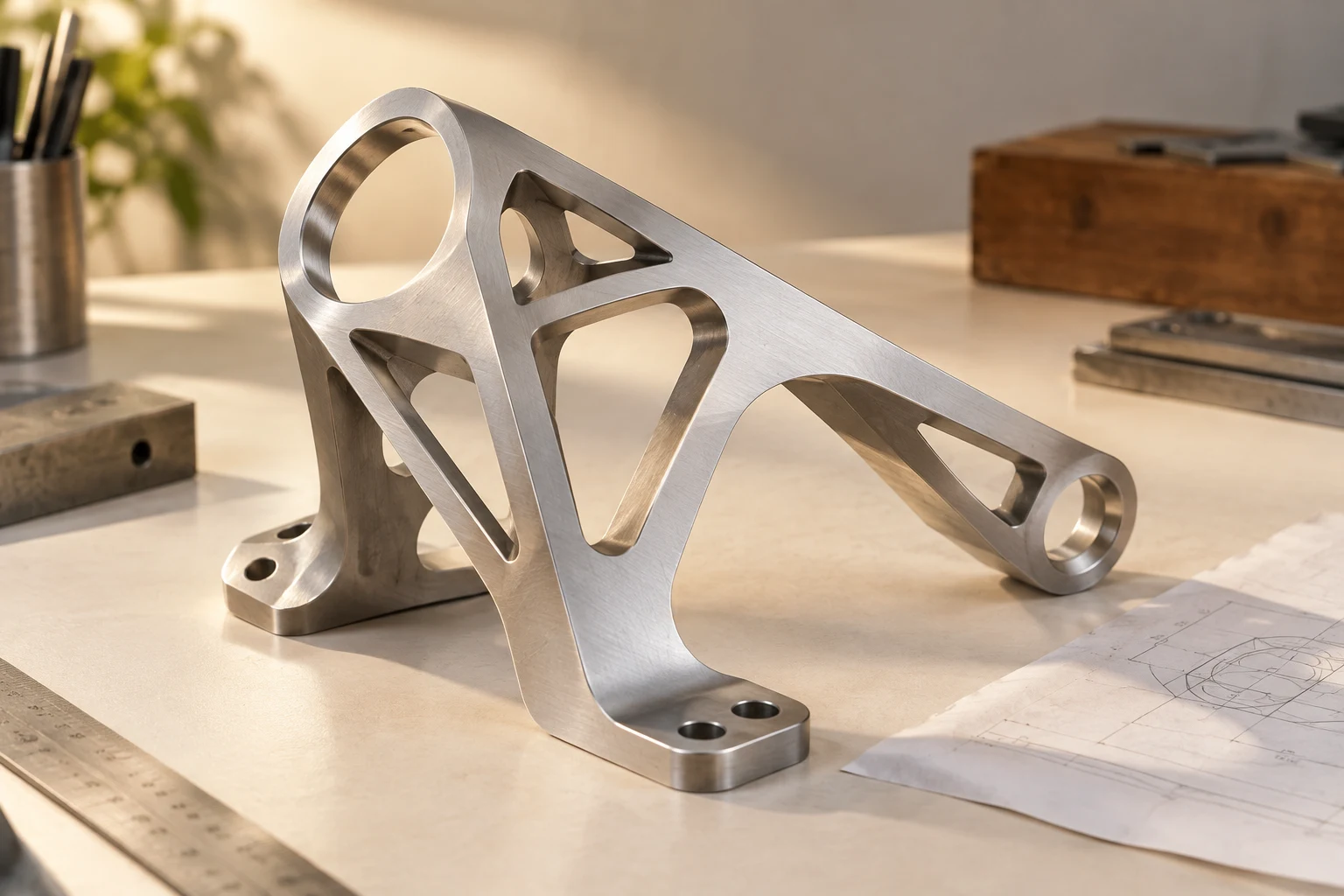
CAD & documentation
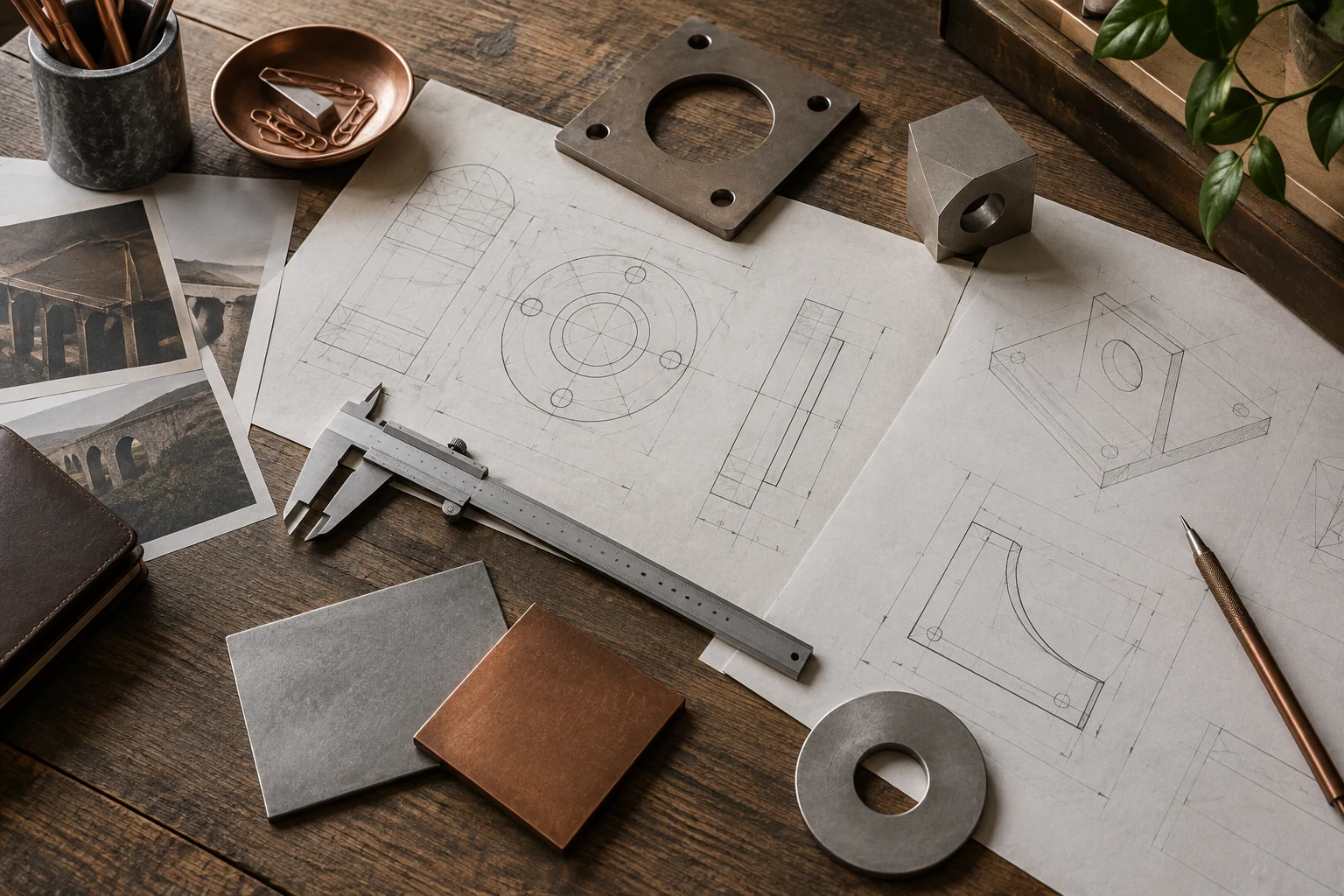
Keep units visible in a CAD handoff
Materials & finishes
Specify a material instead of only a colour
Design foundations
5 articlesDesign foundations
Write a brief that a maker can use
A clear brief connects the purpose of a product to the decisions ahead.
Read the articleDesign foundations
Turn an idea into a measurable requirement
Useful requirements explain how a decision will be checked.
Read the articleDesign foundations
A sketch should answer a question
Simple drawing can support a decision without pretending to be a finished design.
Read the articleDesign foundations
Compare concepts with an honest scorecard
A comparison is useful when the reasoning behind each score is visible.
Read the articleDesign foundations
Design review is a conversation about risk
An effective review identifies what needs attention before the next commitment.
Read the articleCAD & documentation
5 articlesCAD & documentation
Keep units visible in a CAD handoff
A simple naming convention can prevent an expensive misunderstanding.
Read the articleCAD & documentation
Name revisions so they can be traced
A file name should help people recognise the intended version.
Read the articleCAD & documentation
A drawing and a model need a shared purpose
Multiple documents should support the same interpretation of a part.
Read the articleCAD & documentation
Dimension the function, not every visible edge
Drawing detail should make the important relationships understandable.
Read the articleCAD & documentation
Build a useful release checklist
A short check connects the file package to the decision to send it.
Read the articlePrototyping
5 articlesPrototyping
Let the prototype test one thing well
A focused prototype can produce clearer evidence than a polished all-purpose object.
Read the articlePrototyping
Create a prototype test card
A compact record makes an experiment easier to repeat.
Read the articlePrototyping
Review fit with the whole assembly in mind
A part can look correct alone and still be difficult to integrate.
Read the articlePrototyping
Use photographs as design evidence
A useful image includes enough context to support an observation.
Read the articlePrototyping
Close an iteration with a decision
A prototype cycle should change what the team knows or chooses.
Read the articleMaterials & finishes
5 articlesMaterials & finishes
Specify a material instead of only a colour
Appearance is one part of a material decision.
Read the articleMaterials & finishes
Keep finish samples tied to their context
A small swatch should not become a promise about every production part.
Read the articleMaterials & finishes
Ask about substitutions before approving them
A replacement deserves a review of the requirements it affects.
Read the articleMaterials & finishes
Consider packaging during design
The journey between maker and user can reveal overlooked requirements.
Read the articleMaterials & finishes
Build a sample library that explains itself
Reference pieces are useful when their identities remain attached.
Read the articleManufacturing conversations
5 articlesManufacturing conversations
What a laser-cutting conversation should cover
A clear specification matters before process details are discussed.
Read the articleManufacturing conversations
Prepare a request for quotation
Comparable quotations begin with a shared scope.
Read the articleManufacturing conversations
Review a design for manufacture early
The maker’s constraints can inform the concept before it becomes fixed.
Read the articleManufacturing conversations
Discuss assembly before releasing the parts
Production decisions affect how separate pieces become a product.
Read the articleManufacturing conversations
Clarify what a lead time includes
A schedule is easier to use when its starting point is understood.
Read the articleQuality & learning
5 articlesQuality & learning
Define an inspection question
Inspection is more useful when it connects to a requirement.
Read the articleQuality & learning
Make measurement records traceable
An identifiable result is easier to interpret later.
Read the articleQuality & learning
Handle a nonconformance without losing the evidence
A clear record supports a proportionate next decision.
Read the articleQuality & learning
Turn supplier feedback into a design decision
Comments are useful when the team knows what to do with them.
Read the articleQuality & learning
Write a useful project retrospective
A short review can make the next design handoff better.
Read the articleA considered approach.
Independent design and fabrication reading, inspired by this domain’s historical laser-design theme. No affiliation with Devon Laser Designs and no fabrication services or machine operating instructions. Original editorial illustrations.