Home / News
Spatial Computing and XR: The New Interface Between Humans and Digital Worlds
Author: Daniel Johnson
Publication date: July 3, 2026
Spatial computing and extended reality (XR) technologies are revolutionizing how humans interact with digital environments, offering immersive and intuitive interfaces that blend the physical and virtual worlds.
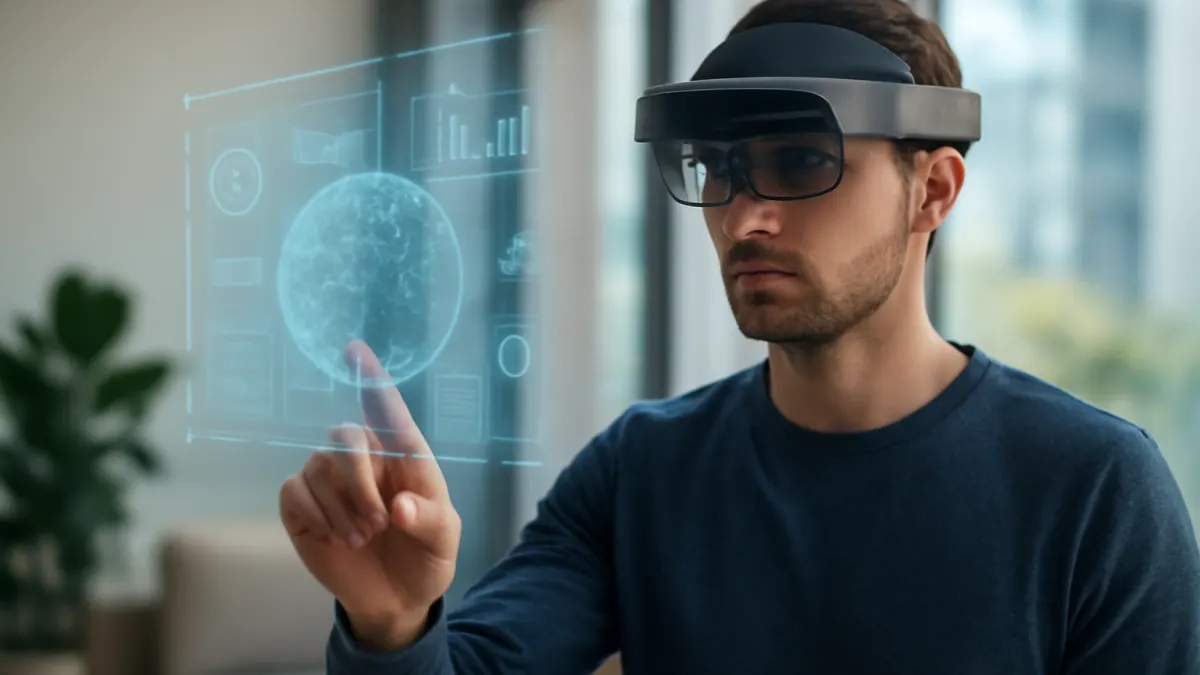
Understanding Spatial Computing and XR
Spatial computing refers to the technology that enables computers to perceive and interact with the three-dimensional space around them, creating a seamless interface between humans and digital content. Extended Reality (XR), an umbrella term encompassing Virtual Reality (VR), Augmented Reality (AR), and Mixed Reality (MR), leverages spatial computing to craft immersive experiences that merge real and digital realms.
The Impact of Spatial Computing as a New Interface
The rise of spatial computing represents a major shift in human-computer interaction methods. Instead of relying on traditional 2D screens or input devices, users can now engage with digital content in a more natural and intuitive way — through gestures, voice commands, and physical movement within real-world spaces. This transformation is opening up new possibilities across various industry sectors.
Applications Driving Innovation
- Healthcare: XR technologies enable realistic simulations for surgical training and remote consultations tailored to individual patient anatomy.
- Education: Immersive classrooms enhance learning by placing students in interactive environments that facilitate experiential understanding.
- Manufacturing and Design: Spatial computing aids in rapid prototyping and accurate visualization, reducing development time and costs.
- Retail and Marketing: Virtual showrooms and AR-enhanced shopping experiences provide customers with personalized engagements.
Overcoming Challenges: The Case of "Brak" Integration
While spatial computing and XR present incredible opportunities, integrating them smoothly into daily workflows requires addressing several challenges. Among these is the issue of "brak"—a term currently used in experimental developments to describe latency and synchronization hurdles in spatial data processing.
Technologists are actively researching methods to minimize brak effects, ensuring that digital objects remain precisely anchored to their real-world counterparts without lag or misalignment. Achieving low-latency interactions is crucial for user comfort and effectiveness, especially in time-sensitive applications like surgical navigation or real-time collaboration.
Looking Ahead: A Future Shaped by Spatial Interfaces
As hardware becomes more affordable and software platforms mature, spatial computing and XR will become increasingly integrated into everyday life. The interface between humans and digital worlds will evolve beyond screens and keyboards to immersive, spatially aware environments that enhance productivity, creativity, and connection.
For readers and technology enthusiasts on devonlaser.com, keeping an eye on developments in spatial computing and XR technologies promises to be an exciting journey as these innovations redefine the boundaries of interaction.
Tags
Article rating
This article has no ratings yet.
No published comments yet.