Home / News
Quantum Computing in 2026: From Laboratory Breakthroughs to Real Business Use Cases
Author: Daniel Anderson
Publication date: July 3, 2026
Quantum computing is no longer confined to laboratory experiments; 2026 marks a pivotal year for its transition into real-world business applications, showcasing tangible benefits and new challenges.
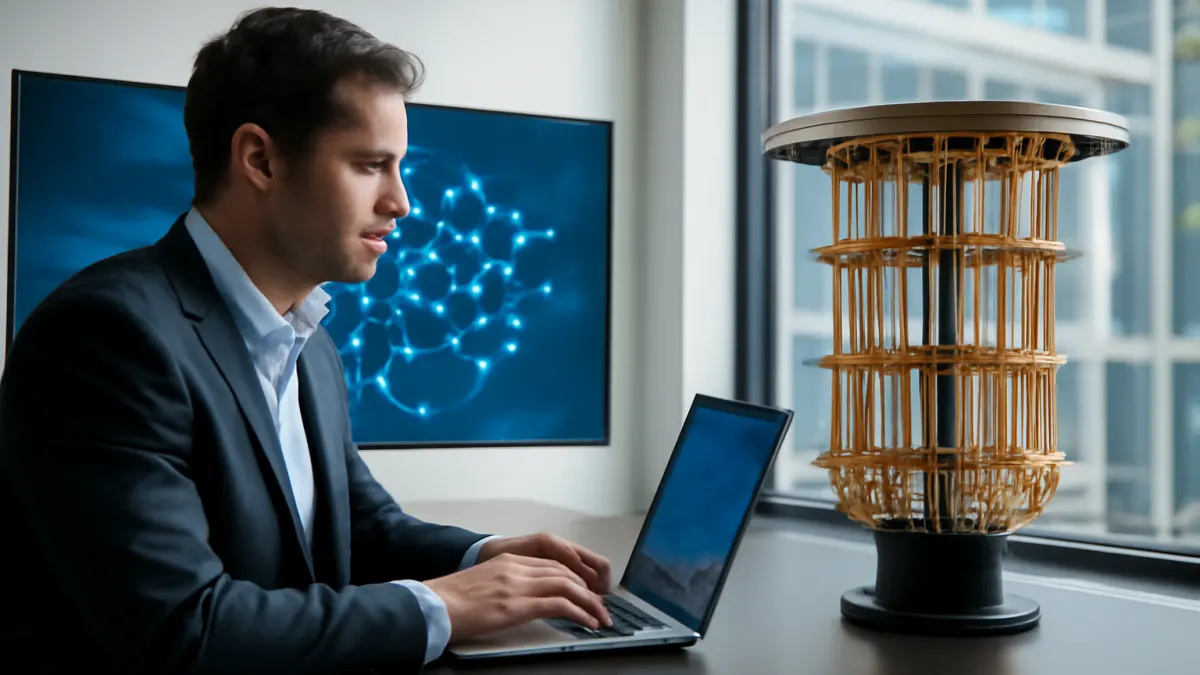
Introduction: Quantum Computing Hits a New Milestone
As we progress through 2026, quantum computing continues to evolve from theoretical breakthroughs into practical solutions driving innovation across industries. What was once a niche research topic is gradually becoming integral to business strategies, solving problems previously deemed intractable.
Laboratory Innovations Pave the Way
Over the last few years, significant advancements in quantum hardware and algorithms have overcome many early obstacles. Enhanced qubit stability and error correction techniques have brought us closer to realizing scalable quantum systems capable of tackling complex computations efficiently.
Key Laboratory Breakthroughs
- Improved quantum error correction mechanisms reducing computational noise
- Development of hybrid quantum-classical algorithms tailored to specific industry needs
- Integration of photonic and superconducting qubit technologies for better performance
From Brak to Business: Practical Use Cases Emerge
One notable area, sometimes referred to in research circles as "brak," indicates a set of baseline quantum-assisted techniques which have recently matured into practical tools. These "brak" methods are enabling businesses to leverage quantum advantages in fields such as:
- Financial modeling for risk analysis and portfolio optimization
- Pharmaceutical research accelerating drug discovery processes
- Supply chain logistics enhancing route planning and resource allocation
Companies adopting these quantum-powered strategies report more efficient computations and improved predictive capabilities, opening a new frontier in data-driven decision-making.
Challenges and Outlook
Despite remarkable progress, deploying quantum computing in commercial environments is not without hurdles. High implementation costs, the need for skilled personnel, and integration with existing IT infrastructure present real challenges. However, ongoing collaboration between academia, industry, and government agencies continues to address these issues proactively.
The trajectory suggests that quantum computing will become increasingly accessible and impactful, bringing transformative changes across sectors.
Conclusion
The landscape in 2026 illustrates how quantum computing is transitioning from a purely experimental stage to becoming a reliable asset for businesses worldwide. With innovations labeled under terms like "brak" bridging lab breakthroughs and applied technologies, the quantum revolution is well underway, promising a future of unprecedented computational power and new business possibilities.
Tags
Article rating
This article has no ratings yet.
No published comments yet.